The Complete Guide to Building Wealth in the Metals & Mining Industry
A Structured Learning Resource for Beginners to Advanced Investors. Understand the fundamentals of how wealth is created in one of the world's most powerful industries.
Why Metals & Mining Remains One of the Most Powerful Wealth-Building Industries
The metals and mining sector underpins the global economy. From infrastructure and energy to technology and manufacturing, raw materials are essential. Every major development—from skyscrapers and bridges to smartphones and electric vehicles—depends on the metals and minerals extracted from the earth.
This guide is designed to educate individuals on how wealth is created in this industry—from basic concepts to advanced strategies. Whether you're a beginner seeking to understand the fundamentals or an advanced investor evaluating opportunities, this resource provides clarity on structure, strategy, and execution in one of the world's most valuable sectors.
The objective: Help you understand the mining value chain, identify entry points, evaluate capital requirements, and apply institutional-grade thinking to wealth creation in metals and mining.
Understanding the Mining Value Chain
Successful wealth creation in mining requires understanding the complete value chain—from the discovery of resources to their sale in global markets. Here are the six critical stages:
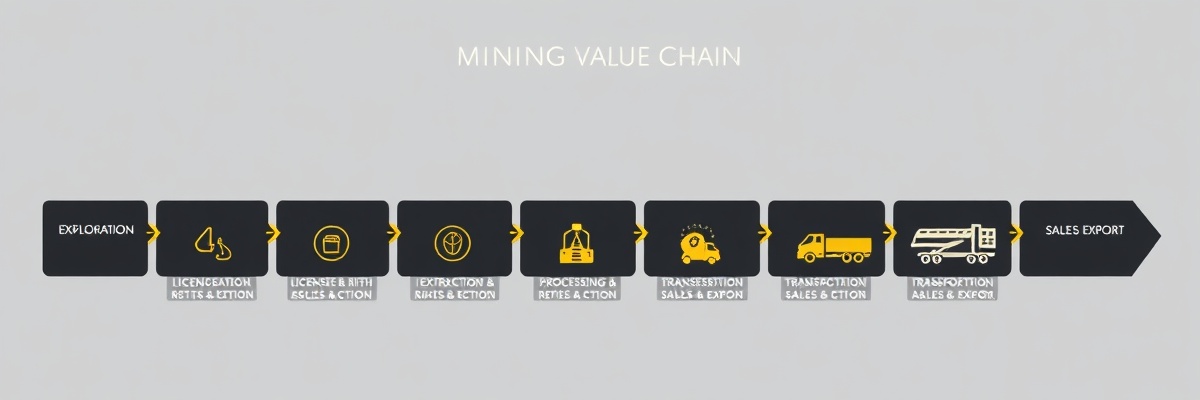
Stage 1: Exploration
The process begins with identifying mineral deposits. Exploration requires geological surveys, drilling, sampling, and analysis to confirm the existence, size, and quality of resources. This stage is capital-intensive but essential—without discovery, there is no mining operation.
- Geological mapping and surveys
- Drilling and core sampling
- Resource estimation
- Risk assessment and opportunity evaluation
Stage 2: Licensing & Rights
Once resources are identified, companies must secure mining rights and licenses from governments. This involves legal negotiations, environmental assessments, and compliance with local regulations. Strong relationships with government agencies and regulatory bodies are critical.
- Government licensing and permits
- Environmental impact assessments
- Community engagement and agreements
- Legal and regulatory compliance
Stage 3: Extraction (Mining)
Extraction is where ore and raw minerals are physically removed from the earth. This stage requires significant capital investment in equipment, labor, and infrastructure. Modern mining operations use advanced technologies for efficiency, safety, and environmental management.
- Open-pit or underground mining operations
- Heavy equipment and machinery
- Labor management and operational control
- Safety and environmental compliance
Stage 4: Processing & Refining
Raw ore is processed to increase purity and value. Processing removes waste material, concentrates the ore, and refines metals to specifications required by markets. The higher the purity, the higher the price commanded.
- Crushing and concentration
- Chemical and metallurgical processing
- Purification to market-grade specifications
- Quality control and testing
Stage 5: Transportation
Refined metals must be transported from processing facilities to ports or markets. Transportation costs impact profitability, so proximity to transportation infrastructure is a major factor in site selection.
- Logistics and supply chain management
- Port access and shipping
- International freight and customs
- Cost optimization and efficiency
Stage 6: Sales & Export
Final stage: metals are sold to global markets. Companies must navigate commodity pricing, buyer relationships, and market timing. Revenue and profitability depend on global demand, commodity prices, and contract negotiations.
- Global commodity market sales
- Buyer relationship management
- Pricing and contract negotiation
- Currency and market risk management
Key Insight: Understanding this complete value chain helps you identify where value is created, where risks exist, and which stage offers the best opportunity for wealth creation based on your capital and expertise.
Types of Metals & Their Role in the Global Economy
Metals are classified by their uses and characteristics. Each category serves different purposes and offers different wealth-building opportunities:
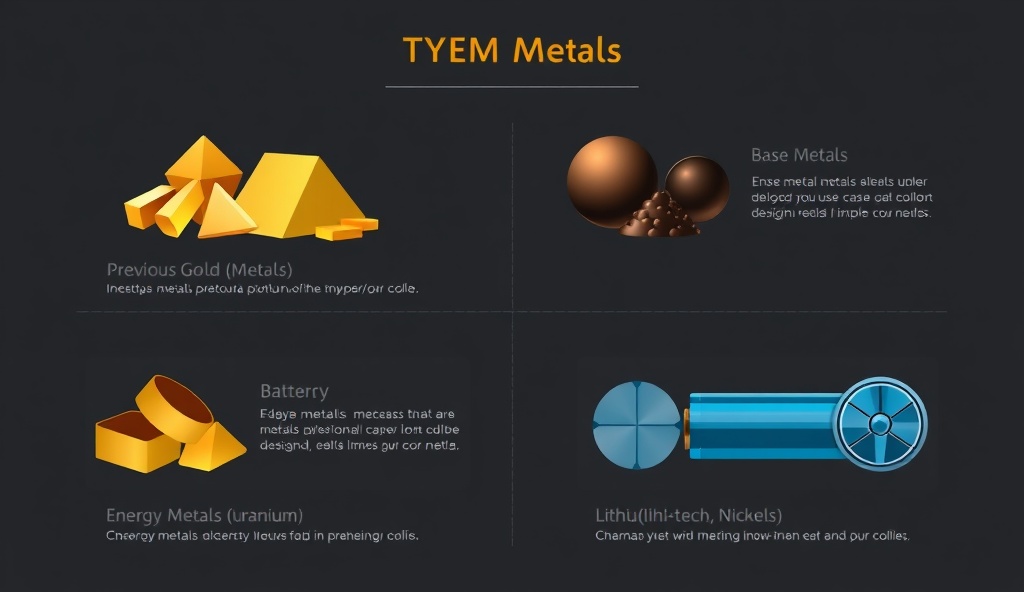
Examples: Gold, Platinum, Palladium, Silver
Primary Use: Store of value, jewelry, industrial applications
- High intrinsic value
- Global demand always exists
- Lower production volumes = higher prices
- Resistant to economic downturns
Examples: Copper, Iron Ore, Zinc, Nickel
Primary Use: Infrastructure, construction, manufacturing
- High production volumes
- Essential to economic growth
- Price driven by industrial demand
- Cyclical with economic cycles
Examples: Coal, Uranium, Rare Earth Elements
Primary Use: Energy generation, industrial applications
- Critical to global power systems
- Demand driven by energy policy
- Political and regulatory importance
- Long-term strategic value
Examples: Lithium, Cobalt, Nickel, Copper
Primary Use: Electric vehicles, energy storage, technology
- Explosive demand growth (EVs, batteries)
- Supply constraints = rising prices
- Future-focused investment opportunity
- Government support and subsidies
Investment Consideration: Each metal category responds differently to economic cycles, political factors, and technological change. A diversified approach across metal types reduces risk and increases resilience.
How Money is Made in Mining
Mining profitability is simple mathematics: Revenue (Production × Commodity Price) − Costs = Profit. Understanding each component is critical to identifying profitable opportunities.
The Revenue Formula
Revenue depends on two factors:
- Production Volume: How much ore you extract and process
- Commodity Price: The global market price for that metal at time of sale
Example: A gold mine producing 100,000 ounces annually at a market price of $2,000/ounce generates $200 million in annual revenue. If the price rises to $2,500/ounce, revenue increases to $250 million—a 25% increase with zero additional mining effort.
Cost Structure
Mining costs include:
- Direct Mining Costs: Labor, equipment maintenance, fuel, explosives
- Processing Costs: Chemicals, equipment, energy, facility operations
- Infrastructure: Roads, power, water, waste management facilities
- Compliance: Environmental management, safety protocols, regulatory fees
- Transportation: Moving ore and refined metals to market
- Capital Depreciation: Equipment wear and replacement
Profit Drivers
Mining profit depends heavily on efficiency + market timing:
- Operational Efficiency: Lower-cost mines are more profitable at any commodity price
- Commodity Price Cycles: Sell when prices are high, accumulate when prices are low
- Grade & Purity: Higher-grade ore commands premium prices
- Scale: Larger operations spread fixed costs across more production, lowering per-unit costs
Critical Insight: The most profitable mining operations balance three things: low operational costs, strong commodity prices, and disciplined capital allocation. A mediocre operation with great commodity prices can be very profitable; a great operation with poor commodity prices can lose money.
Entry Strategies for Different Investor Levels
Wealth creation in mining is available at multiple entry levels. Your strategy depends on your capital, expertise, and risk tolerance:
Beginner Level Entry
- Invest in mining stocks: Purchase shares in established mining companies through stock markets. Low capital required (as little as R1,000), diversified exposure, liquid investment.
- Mining-focused ETFs: Exchange-traded funds focused on mining give you diversified exposure across multiple companies and metals.
- Goal: Learn commodity cycles, understand the industry, build wealth through long-term compounding of dividends and capital appreciation.
Intermediate Level Entry
- Partner with small operators: Fund existing mining operations in exchange for profit sharing. Requires R500K–R5M and due diligence capacity.
- Fund junior exploration: Provide capital to early-stage mining exploration companies seeking to discover new deposits. Higher risk, but significant upside if discoveries are made.
- Contract mining operations: Lease mining rights and equipment to operate a portion of a larger operation. Requires operational knowledge and management capacity.
- Goal: Generate higher returns than stock ownership while maintaining some operational control and strategic influence.
Advanced Level Entry
- Acquire mining rights: Purchase government mining concessions and operate your own site. Requires R5M–R100M+, significant technical expertise, and operational capability.
- Operate a mining business: Build your own mining operation from exploration through production. Requires capital, team, expertise, and multi-year execution.
- Build a mining holding company: Acquire multiple operations across different metals and geographies. Scale for institutional investment.
- Goal: Create a significant, scalable mining business with professional operations and institutional-grade capital allocation.
Strategy Selection: Start at the level aligned with your current capital and expertise. Beginner-level investors can graduate to intermediate strategies after developing industry knowledge. Advanced strategies require professional teams and institutional-level discipline.
What It Actually Costs to Enter
Capital requirements vary dramatically by entry level. Here's a realistic breakdown:
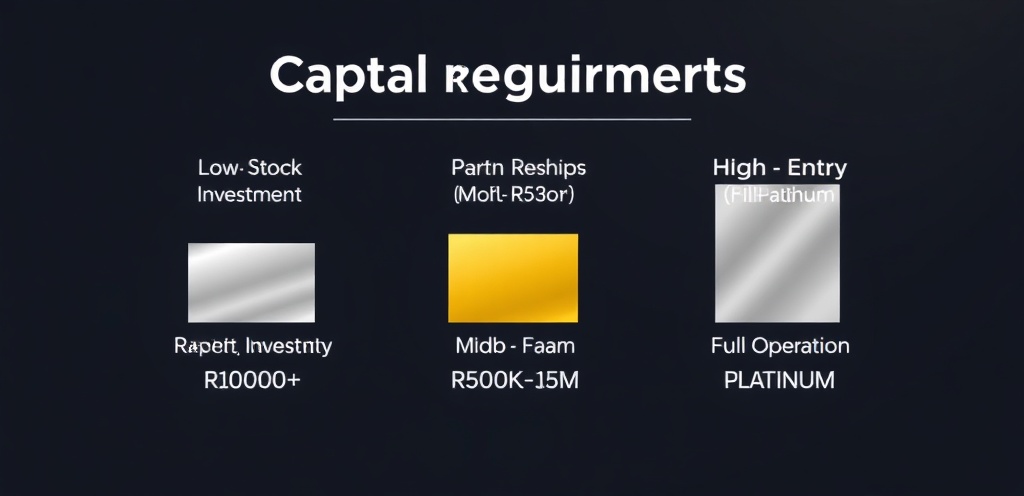
R1,000+
- Purchase mining stocks
- Build portfolio over time
- Monthly or quarterly additions
- Liquid, easy to exit
R500K–R5M
- Fund small operations
- Partner with operators
- 3–5 year profit sharing
- Higher returns, less liquid
R5M–R100M+
- Acquire mining rights
- Build/operate mine
- Multi-decade cash flow
- Requires professional team
Detailed Cost Breakdown: Operating a Mining Site
If you're considering advanced-level entry (operating a mining site), understand these real costs:
- Acquisition & Rights: R1M–R50M (depends on location, resource quality, regulatory complexity)
- Infrastructure Development: R2M–R20M (roads, water, power, processing facilities)
- Equipment & Machinery: R3M–R30M (excavators, trucks, processing equipment)
- Working Capital: R2M–R10M (operational expenses for first 6–12 months before production)
- Team & Management: R1M–R5M annually (engineers, geologists, operations managers)
- Licensing & Compliance: R500K–R2M (environmental permits, legal, regulatory)
Total Initial Investment: R9.5M–R117M minimum for a functional mining operation. Most professional operations start at R20M+ to have adequate safety margins and operational capacity.
Important: These are capital requirements for entry, not guaranteed profitability. Many mining operations fail due to poor planning, operational errors, or unfavorable commodity prices. Conservative financial planning and risk management are essential.
Risks & Challenges in Mining
Be clear-eyed about the risks. Mining is a high-risk, high-reward industry. Understanding these challenges separates professionals from amateurs:
Regulatory and Permitting Risk
Acquiring and maintaining mining permits is complex and time-consuming.
- Government can delay or deny permits indefinitely
- Regulatory changes can shut down operations
- Environmental requirements constantly evolve
- Community opposition can halt projects
Environmental & Compliance Risk
Environmental management is both a major cost and a major risk.
- Mining causes environmental impact—managing it is expensive
- Violations result in fines, shutdowns, or criminal liability
- Long-term liability for site restoration
- Growing global environmental standards increase costs
Commodity Price Volatility
You cannot control global commodity prices, but they control your profitability.
- Commodity prices swing 30–50%+ annually
- A profitable operation can become unprofitable if prices collapse
- You may need to continue mining at a loss during downturns
- Currency risk affects export-based operations
Operational Risk
Mining operations are complex and prone to failures.
- Equipment breakdowns halt production and revenue
- Safety incidents result in costs, liability, and shutdowns
- Skills shortages make finding quality management difficult
- Mine depletion: geological ore quality declines over time
Capital Requirements & Liquidity Risk
Mining operations require sustained capital and offer limited liquidity.
- Unexpected costs often exceed budgets
- Building an operation takes 3–7 years before full profitability
- Selling a mining operation is difficult and takes time
- Tied-up capital generates no return during development phase
Reality Check: Mining is not a get-rich-quick scheme. It's a disciplined, capital-intensive, long-term business requiring deep expertise, strong management, and patience. Many mining companies fail despite having good geological deposits. The difference between success and failure is usually operational discipline and financial management.
Opportunities in South Africa
South Africa is a world-leading mining nation with significant opportunities and unique challenges:
Resource Base
South Africa has extraordinary mineral wealth:
- World's largest platinum reserves (90%+ of global reserves)
- Significant gold deposits in the Witwatersrand Basin
- Large coal reserves for energy and export
- Emerging deposits of battery metals (lithium, cobalt)
- Rare earth elements (growing importance for tech)
Export Market Strength
South Africa is a major global mining exporter:
- Mining constitutes 5–10% of South Africa's GDP
- Mining operations export to global markets, creating forex income
- Established infrastructure for mineral export (ports, logistics)
- Global demand for South African metals is consistent
Regulatory Environment
South Africa has a framework for mining, with important challenges:
- Positive: Established legal system, clear mining codes, predictable permitting process
- Challenges: Bureaucratic processes are slow, corruption can complicate permitting, political instability creates uncertainty
- Equity Requirements: Government requires broad-based black economic empowerment (B-BBEE) in mining ventures
- Compliance: South African mining regulations are strict; full adherence is essential
Strategic Positioning
South Africa's mining sector is at an inflection point:
- Aging coal operations requiring transition strategies
- Platinum and gold operations benefiting from strong global prices
- Emerging opportunities in battery metals supply chains
- Global capital seeking exposure to South African mining
South African Opportunity: For local and international investors, South Africa offers world-class mineral resources, established export infrastructure, and a legal framework for mining. Success requires navigating regulatory complexity, building strong local partnerships, and maintaining long-term commitment to operations.
How Mining Businesses Grow
Building a sustainable mining business requires strategic scaling. Here's how professional operations expand:
Strategy 1: Increase Production
Optimize existing operations to produce more ore with the same or lower costs.
- Invest in more efficient equipment
- Expand mining boundaries within licensed area
- Improve processing efficiency
- Reduce operational downtime through better maintenance
Impact: Increasing production 20% on a profitable operation increases profit 20%+ (since many costs are fixed).
Strategy 2: Expand to New Sites
Acquire additional mining rights or properties to operate multiple sites.
- Acquire adjacent mining claims
- Develop exploration prospects into producing mines
- Acquire mature operations from other operators
- Expand internationally with proven operational model
Impact: Geographic diversification reduces risk and leverages management expertise across multiple operations.
Strategy 3: Vertical Integration
Control more of the value chain by owning processing, transportation, or sales capabilities.
- Build your own processing facility (higher value than selling raw ore)
- Invest in transportation infrastructure (reduce shipping costs)
- Establish direct relationships with buyers (improve pricing)
- Control more of the profit margin
Impact: Vertical integration increases margin significantly but requires more capital and expertise.
Strategy 4: Secure Long-Term Contracts
Lock in buyers and prices through offtake agreements.
- Negotiate multi-year purchase agreements with buyers
- Secure fixed or floor pricing to protect downside
- Build strategic partnerships with major consumers
- Create revenue predictability
Impact: Offtake agreements provide financing and reduce commodity price risk, making operations more bankable.
Scaling Principle: Successful mining companies scale through a combination of operational excellence (producing more at lower cost), geographic expansion (multiple operations), and strategic partnerships (securing buyers and capital). Each strategy requires disciplined execution and strong financial management.
Wealth in Mining Comes From Asset Ownership
The fundamental principle of mining wealth: ownership of productive assets generates long-term value through cash flow and appreciation.
Why Asset Ownership Matters
- Cash Flow: Operating mines generate cash flow that can be reinvested or distributed to owners
- Appreciation: As the mine depletes, resource value per unit often increases; improving operations can increase valuation
- Long-Term Value: Mining operations can operate for decades, creating compounding returns
- Control: Asset owners make strategic decisions and benefit from improved operations
Building Wealth Through Mining Assets
The wealth-building formula in mining:
- Year 1-3: Build operation, develop mining, establish production and cash flow
- Year 4-10: Optimize operations, increase production, build equity value
- Year 10+: Operate at peak efficiency, generate strong cash flow, reinvest or scale
- Exit (if desired): Sell the operation to a larger company at a premium valuation
Reinvestment for Compounding
Wealth compounds when you reinvest mining profits into:
- Expanding the current operation (increased production)
- Acquiring additional mining rights
- Building new mines in new locations
- Investing in complementary real assets (real estate, equipment, infrastructure)
Example: A mine generating R50M annual profit that reinvests all profits into expansion will double in size every 5 years, creating exponential wealth growth over decades.
Core Principle: Mining wealth is not built through trading or speculation. It is built through patient ownership of productive assets, disciplined reinvestment of profits, and long-term operational excellence. This approach has created the world's great mining fortunes.
Ethics, Responsibility & Long-Term Sustainability
Sustainable mining is both a moral imperative and a business necessity. Mining operations that fail to manage environmental and social impact face shutdowns, fines, and reputational damage.
Environmental Responsibility
- Minimize environmental impact: Use modern technologies to reduce water use, air emissions, and waste
- Proper waste management: Manage tailings and waste in ways that prevent long-term environmental damage
- Biodiversity protection: Protect ecosystems and species where possible
- Remediation planning: Plan and fund site restoration after mining operations end
Worker Safety & Fair Labor
- Safety culture: Invest in safety training, equipment, and protocols
- Fair wages: Pay workers fairly and provide benefits
- Working conditions: Maintain professional, safe working environments
- Skills development: Train workers for long-term career development
Legal Compliance
- Government regulations: Strict adherence to all mining and environmental laws
- Permitting requirements: Full compliance with licensing and reporting
- Community agreements: Respect local communities and fulfill commitments
- Transparency: Open communication with stakeholders about operations and impacts
Business Reality: Mining companies that prioritize environmental and social responsibility face fewer regulatory obstacles, enjoy stronger community support, have better access to capital, and maintain operational licenses for longer. Responsible mining is not just ethical—it's good business.
The Complete Picture: Building Wealth in Metals & Mining
Key Takeaways
- Mining is complex but powerful: The industry underpins global economy and wealth creation happens at scale
- Multiple entry points exist: From stock ownership (R1K) to operating businesses (R50M+), there are opportunities at every capital level
- Scale + discipline = wealth: Success comes from understanding the value chain, managing risk, and executing with discipline
- Commodity prices matter: Understanding cycles and timing capital deployment is critical to profitability
- Operations are everything: Professional management, environmental compliance, and worker safety are non-negotiable
- Long-term thinking wins: Mining wealth is built over decades through patient ownership and reinvestment
Your Next Steps
If you're interested in mining-related wealth creation:
- Beginner: Start by investing in mining stocks and learning the sector. Read mining company reports, understand commodity cycles.
- Intermediate: Develop deeper expertise through partnerships, advisory roles, or joint venture participation. Learn operations firsthand.
- Advanced: Build your own mining business by acquiring rights, assembling a team, and executing a multi-year operational plan.
Final Thought: Metals and mining has created some of the world's greatest fortunes. The wealth is real, the opportunity is real, and the capital gains are substantial—but only for those who understand the industry, respect the complexities, and maintain discipline through commodity cycles. This guide provides the foundation. The execution is up to you.
Support This Knowledge-Sharing Mission
This educational guide represents hours of research and strategic thinking. If it has provided value to your understanding of the metals and mining industry, consider supporting the platform to help maintain and expand this educational resource.
B12 Referral Support
Support the platform through the B12 referral program. I'll withdraw funds once operational in the USA and reinvest in platform growth.
Referral Link: B12 Platform Partnership
Partnership & Growth
I'm interested in discussing strategic business opportunities with the B12 team for potential collaboration and mutual growth.
Contact: info@rskahn.com
Build Wealth Through Knowledge & Discipline
This guide provides institutional-grade education on the metals and mining industry. Use this foundation to evaluate opportunities, build expertise, and create long-term wealth through disciplined capital allocation.
View All Educational Guides Back to RS KAHN Platform