The Complete Guide to Building Billion-Dollar Wealth in the Automotive Industry
From Entry-Level to Global Automotive Empire. A Structured Learning Resource for Beginners to Advanced Investors. Understand how billionaires build wealth in one of the world's largest industries.
Why the Automotive Industry Creates Billionaires
The automotive industry is one of the largest industries in the world—a combination of engineering, manufacturing, logistics, retail, financing, and branding that generates trillions in global value annually.
From mass production to luxury vehicles and mobility platforms, the industry offers multiple pathways to building extreme wealth. Whether through dealership networks, rental fleets, manufacturing, or brand creation, fortunes have been built by understanding how money moves in automotive.
This guide explains exactly how wealth is built in the automotive industry—step by step, opportunity by opportunity, from entry-level to global empire.
Understanding the Automotive Value Chain
Successful wealth creation in automotive requires understanding the complete value chain—where value is created, where costs accumulate, and where profit is extracted. Here are the six critical stages:
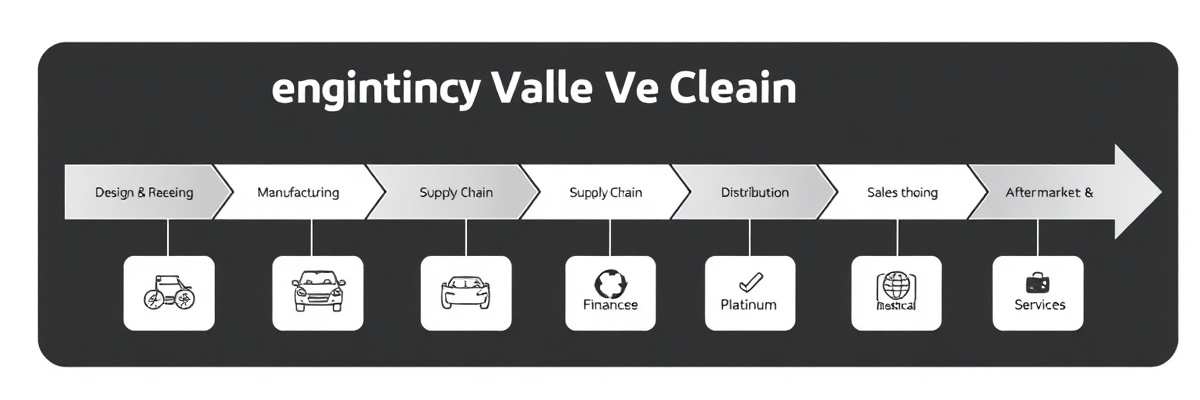
Stage 1: Design & Engineering
The process begins with vehicle design and engineering. Successful automotive companies invest heavily in R&D, design teams, testing facilities, and innovation. Strong design creates brand differentiation and justifies pricing premiums.
- Product development and innovation
- Engineering and testing
- Brand differentiation and desirability
- Regulatory compliance and safety standards
Stage 2: Manufacturing & Assembly
Manufacturing is where design becomes physical reality. Modern manufacturing combines sophisticated equipment, precision labor, and operational excellence. Manufacturing efficiency directly impacts profitability.
- Factory operations and assembly lines
- Quality control and testing
- Workforce management and productivity
- Production planning and optimization
Stage 3: Supply Chain
Automotive relies on complex supply chains—engines, transmissions, components, materials. Control of supply chain can provide competitive advantage, cost savings, and operational reliability.
- Raw material sourcing
- Component manufacturing and suppliers
- Logistics and inventory management
- Cost management and vendor relationships
Stage 4: Distribution
Getting vehicles from factories to dealers and buyers requires sophisticated logistics. Distribution networks determine delivery speed, costs, and customer satisfaction.
- Warehouse and distribution centers
- Shipping and logistics
- Inventory management
- Dealer network relationships
Stage 5: Sales & Financing
This is where revenue and significant profit are captured. Dealerships sell vehicles while financing companies provide loans. Smart financing is a major profit driver.
- Dealership sales operations
- Customer financing and credit approval
- Lease programs and fleet sales
- Trade-in and used vehicle management
Stage 6: Aftermarket & Services
After the sale, vehicles require maintenance, repairs, and upgrades. Aftermarket services are highly profitable because owners need them repeatedly over years.
- Service and maintenance centers
- Parts and accessories sales
- Extended warranties and service plans
- Vehicle upgrades and customization
Key Insight: The automotive value chain creates multiple wealth-building opportunities. You don't need to control the entire chain—identifying the most profitable segments and building excellence there is the path to serious wealth.
Where the Money Is Made
Understanding profit centers is critical to building wealth. Not all parts of the automotive value chain are equally profitable. Here's where the money actually flows:
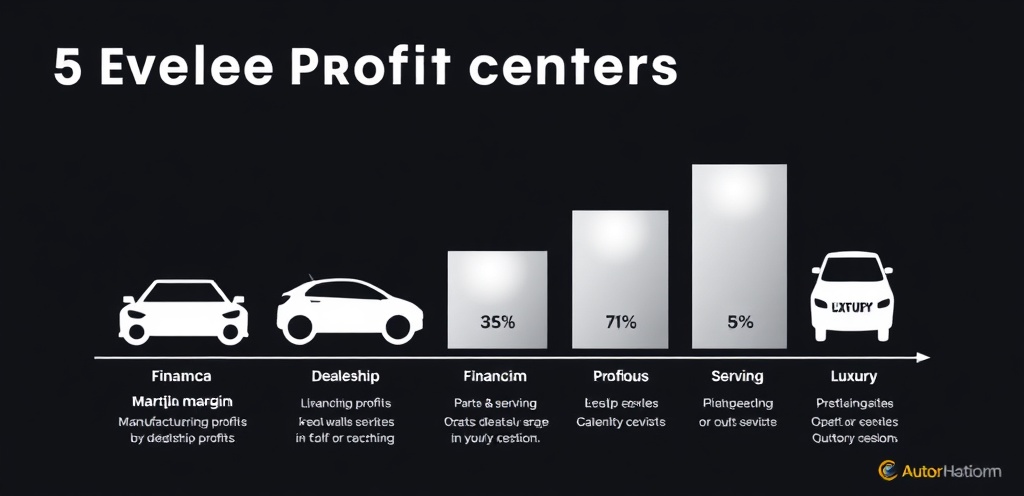
Operating a production facility is capital-intensive but can be highly profitable with scale and efficiency.
- Economies of scale lower per-unit costs
- Volume multiplies margin
- Requires massive upfront capital investment
- Highest barriers to entry
Dealerships make money from vehicle sales, used inventory, and service departments.
- Profit margins on new vehicles: 5-8%
- Used vehicles: 10-15% margin
- Service and maintenance: 40-60% margin
- Lower capital than manufacturing
Financing is where dealerships and manufacturers extract serious profits.
- Auto loans have high interest rates
- Extended warranties are highly profitable
- Insurance products add revenue
- Monthly payment streams create cash flow
Aftermarket services are extremely profitable because owners need them repeatedly.
- Highest margin segment (40-60%)
- Recurring revenue from service customers
- Genuine parts sold at premium markup
- Extended service plans are cash generators
Brand Premium (Luxury Segment)
Luxury brands (Tesla, Ferrari, Mercedes, BMW) command significant price premiums and attract high-net-worth buyers willing to pay more. Building a strong brand allows higher pricing.
- Premium pricing (30-100% higher than standard)
- Lower production volumes, higher margins
- Wealthy customer base with strong loyalty
- Requires significant investment in brand building
Critical Insight: The most profitable automotive players don't just sell cars—they control ecosystems. They finance the sale (earning interest), service the vehicle (high margin), and sell parts (recurring revenue). Vertical integration of these profit centers is where billionaire wealth is built.
Entry Strategies for Different Investor Levels
Wealth creation in automotive is available at multiple entry levels. Your strategy depends on your capital, expertise, and risk tolerance:
Beginner Level Entry (R10K – R500K)
Entry strategies with lower capital:
- Work in dealership sales: Learn customer psychology, sales dynamics, and how dealerships operate from the inside. Build relationships and understand the business before investing.
- Car flipping: Buy used vehicles at auctions or from individuals, make minor repairs or cosmetic improvements, and resell for profit. Learn the market and build capital.
- Become a broker: Facilitate vehicle sales between buyers and sellers, earning commissions without owning inventory.
- Start online retail: Sell automotive parts, accessories, or supplies through e-commerce platforms.
Goal: Build experience, develop relationships, accumulate capital, and understand the automotive market before larger investments.
Intermediate Level Entry (R500K – R5M)
Mid-capital strategies with operational involvement:
- Start a car rental business: Purchase a fleet of 5-20 vehicles and rent them to tourists, business travelers, or ride-hailing services. Build recurring revenue.
- Small dealership: Open a used car dealership focusing on a specific market segment (affordable vehicles, luxury, commercial, etc.). Requires location, inventory capital, and sales expertise.
- Import/export business: Import vehicles from other countries or export local vehicles internationally. Navigate logistics, regulations, and pricing arbitrage.
- Service center: Open an independent service center for repairs and maintenance. Build recurring customer base and high-margin service revenue.
Goal: Generate meaningful cash flow, build operational expertise, and create a scalable business foundation.
Advanced Level Entry (R5M+)
Large-capital strategies for building empires:
- Open a major dealership: Launch a full-service dealership with showroom, service center, and financing capabilities. Requires significant capital, location, and brand relationships.
- Build a large fleet business: Create a 100+ vehicle fleet for corporate leasing, ride-hailing, or logistics. Develop professional management and operational systems.
- Start an automotive brand: Build your own vehicle line, either through manufacturing partnerships or unique market positioning. Requires design, engineering, marketing, and capital.
- Acquire existing dealership networks: Buy multiple locations and consolidate them into a larger operation for economies of scale.
Goal: Build a significant, scalable automotive business with professional operations and institutional-grade capital allocation.
Strategy Selection: Start at the level aligned with your capital and expertise. Beginner-level operators often graduate to intermediate strategies after building experience and accumulating capital. The most successful automotive entrepreneurs start small, learn the business thoroughly, then scale systematically.
Capital Requirements by Entry Strategy
Different automotive business models require different levels of capital. Here's a realistic breakdown:
- Car flipping
- Sales commission
- Brokerage business
- Parts retail
- Low overhead
- Rental fleet (5-20 cars)
- Small used dealership
- Import/export operation
- Service center
- Moderate leverage
- Major dealership
- Large fleet (100+ vehicles)
- Manufacturing partnership
- Brand development
- Significant leverage
Detailed Cost Breakdown: Opening a Used Car Dealership
If you're considering opening a dealership, understand these real costs:
- Location & Facility: R2M–R5M (prime location with showroom, office, service bay)
- Initial Inventory: R1M–R3M (15-25 vehicles to start, depending on segment)
- Licensing & Permits: R250K–R500K (government licenses, environmental compliance, insurance)
- Equipment & Systems: R500K–R1M (POS system, lifts, diagnostic equipment, furniture)
- Working Capital: R500K–R1M (operational expenses for first 3-6 months before profitability)
- Marketing & Launch: R300K–R500K (signage, advertising, opening promotion)
Total Initial Investment: R4.5M–R11M minimum for a functional dealership. Most successful operations start at R7M+ to have adequate inventory, capital reserves, and operational capacity.
Important: These are capital requirements for entry, not guaranteed profitability. Location, reputation, capital reserves, and operational expertise directly impact whether the dealership succeeds. Conservative financial planning and strong management are essential.
How Automotive Businesses Scale to Dominance
Building a significant automotive business requires strategic scaling. Here's how professional operators expand:
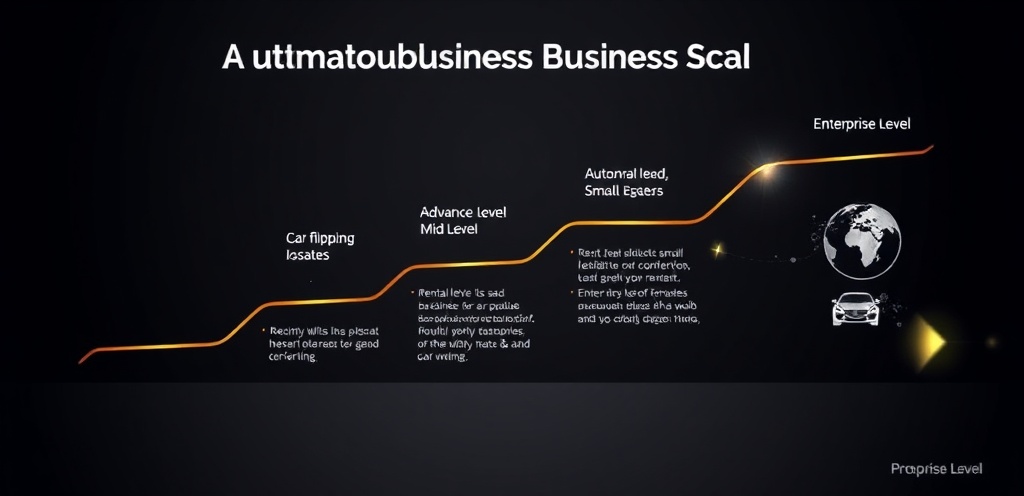
Strategy 1: Increase Inventory
More vehicles means more sales volume and revenue. Scale inventory as you prove the business model and cash flow.
- Add inventory gradually—as older stock sells, purchase more
- Diversify vehicle selection to appeal to broader market
- Develop efficient inventory turnover systems
- Manage cash flow carefully to fund expansion
Strategy 2: Expand Locations
Replicate the successful dealership model in new cities. Multi-location operators have significant competitive advantages.
- Expand to adjacent cities or regions
- Create a network of locations under a unified brand
- Leverage established reputation and customer base
- Build centralized operations (financing, HR, IT) to serve multiple locations
Strategy 3: Build Brand Reputation
A strong brand commands customer loyalty, attracts foot traffic, and allows premium pricing.
- Focus on customer service and satisfaction
- Build positive online reviews and reputation
- Invest in marketing and brand building
- Create brand loyalty through customer programs
Strategy 4: Add Financing Services
In-house financing is where dealerships extract serious profits. Develop relationships with lenders and offer financing directly.
- Partner with finance companies for customer loans
- Earn spread between lending rate and customer rate
- Offer extended warranties and insurance products
- Create recurring revenue from monthly customer payments
Strategy 5: Develop Service & Aftermarket
Service departments are among the most profitable segments of an automotive business. Every vehicle sold becomes a future service customer.
- Build in-house service facilities
- Create service plans and warranty programs
- Sell genuine parts at premium markups
- Build recurring revenue from existing customer base
Scaling Principle: Successful automotive empires typically follow this progression: master a single location, add multiple locations, build brand reputation, integrate financing, and develop high-margin aftermarket services. Each stage compounds the value and profit of the previous one.
The Future of Automotive Wealth: Modern Opportunities
The automotive industry is undergoing dramatic transformation. New opportunities are emerging for entrepreneurs willing to understand emerging trends:
Electric Vehicles (EVs)
The shift to electric vehicles is reshaping the entire industry. Opportunities include EV dealerships, charging infrastructure, battery services, and conversion services.
- EV dealership specialization (premium margins on new technology)
- Charging station networks (recurring revenue)
- EV repair and battery services (specialized, high-margin work)
- Used EV market development (growing as more EVs enter market)
Autonomous & Self-Driving Technology
Self-driving technology is advancing rapidly. This creates opportunities in autonomous fleet services, last-mile delivery, and technology integration.
- Autonomous fleet services (robotaxi networks)
- Delivery and logistics automation
- Technology partnerships and integration
- Insurance and licensing model development
Mobility Platforms
Models like Uber/Lyft demonstrate that fleet-based mobility is highly profitable. Building fleet platforms in your local market can be extremely lucrative.
- Ride-hailing fleet operations
- Corporate shuttle and logistics services
- Subscription vehicle services (monthly payments vs. ownership)
- Fleet management software and optimization
Global Trade & Import/Export
International vehicle trade remains highly profitable. Sourcing vehicles from low-cost markets and exporting to higher-price markets creates significant arbitrage opportunities.
- Import vehicles from Asia (Japan, South Korea, China) for African markets
- Export used vehicles to developing markets
- Navigate regulations, customs, and shipping efficiently
- Build relationships with international buyers and sellers
Emerging Opportunity: The next generation of automotive billionaires will likely be those who successfully navigate the EV transition, develop mobility platforms, or build dominant import/export networks. The traditional dealership model is evolving—positioning yourself ahead of these changes is critical.
The South African Automotive Opportunity
South Africa presents unique automotive wealth-building opportunities due to market dynamics, demand patterns, and geographic positioning:
Market Characteristics
- Large used car market: New vehicle prices are high; most South Africans buy used vehicles
- High demand for affordable vehicles: Growing middle class seeking dependable transportation
- Tourism demand: Strong rental demand from international tourists and business travelers
- Commercial fleet demand: Logistics, delivery, and business fleets require ongoing fleet management
Competitive Advantages
- Regional hub positioning: South Africa can serve southern African markets through import/export
- Manufacturing base: Existing automotive manufacturing creates local expertise and supply chains
- Emerging middle class: Growing purchasing power increases vehicle demand
- Unmet service needs: Many independent operators can capture market share from larger players
Realistic Challenges
- Economic volatility: Macro-economic factors affect vehicle sales and prices
- High debt levels: Many potential customers struggle to finance purchases
- Competition: Established dealership chains dominate many markets
- Regulatory compliance: Import/export requires expertise with regulations and customs
South African Strategy: The best opportunities in South African automotive are typically in specialized niches (used vehicle dealerships, fleet rentals, import specialists) or emerging segments (EV dealerships, mobility platforms). Building a strong reputation and operatingswith excellence in a specific niche is the path to sustainable profitability.
High-Growth Automotive Business Models
Not all automotive businesses scale equally. These models have proven ability to grow from startup to multi-million-rand operations:
Dealership Networks
Multiple dealership locations under unified management and brand. Proven model with established operational framework.
- Scale: 5-50+ locations
- Revenue potential: R50M–R500M+ annually
- Capital intensity: High (but strong cash flow)
- Complexity: Operational management, brand consistency, supply chain
Rental Fleet Services
Vehicle fleets rented to tourists, businesses, or ride-hailing drivers. Recurring revenue model with compounding benefits.
- Scale: 50-500+ vehicles
- Revenue potential: R10M–R200M+ annually
- Capital intensity: Moderate to high
- Advantages: Recurring revenue, predictable cash flow
Leasing Companies
Corporate and personal vehicle leasing with financing component. Extremely profitable when scaled.
- Scale: Multi-thousand vehicle fleets
- Revenue potential: R100M–R1B+ annually
- Capital intensity: Very high (but financed)
- Advantages: Monthly recurring revenue, financing spreads, insurance
Automotive Marketplaces
Digital platforms connecting buyers and sellers. Scalable with network effects and minimal physical assets.
- Scale: Unlimited (digital platform)
- Revenue potential: R50M–R5B+ (commissions on transactions)
- Capital intensity: Low to moderate
- Advantages: Scalable, network effects, high-margin revenue
Luxury & Exotic Rental Services
High-end vehicle rentals targeting wealthy customers. Premium pricing model with lower volume but higher margins.
- Scale: 20-200 vehicles
- Revenue potential: R20M–R300M+ annually
- Capital intensity: Very high (luxury vehicles expensive)
- Advantages: High daily rates, wealthy customer base, brand premium
Model Selection: Choose a model aligned with your target market, capital, and expertise. Dealership networks require operational excellence and location strategy. Rental fleets require customer acquisition and fleet management. Marketplaces require technology and network building. Each path has different capital requirements and scaling dynamics—choose based on your strengths.
How Billionaires Win in Automotive
The wealthiest automotive entrepreneurs follow consistent strategic principles. Here's what separates billionaire-scale operators from smaller competitors:
Control Distribution
Vertical control of the supply chain—from manufacturing or sourcing through to customer—creates competitive moats and higher profits.
- Own dealership networks (not franchised)
- Control supply sourcing and importing
- Manage financing in-house (not outsourced)
- Build direct relationships with customers
Build Strong Brands
A recognized brand commands customer loyalty, attracts higher-quality customers, and allows premium pricing.
- Invest in consistent brand messaging
- Focus on customer service and satisfaction
- Build brand reputation over years and decades
- Premium brands command higher margins
Focus on Scale
Volume multiplies profit. Billionaire automotive operators typically have thousands of vehicles, hundreds of locations, or massive customer bases.
- Build operational systems that scale
- Achieve economies of scale in operations
- Deploy capital to proven business models
- Reinvest profits into growth
Use Financing as Leverage
Automotive financing is where massive profits are extracted. Control of financing creates exponential wealth multiplication.
- Develop in-house financing capabilities
- Earn spreads between lending rates and customer rates
- Create recurring monthly revenue streams
- Use customer payment streams as collateral for more leverage
Expand Globally
The largest automotive fortunes are built on global scale—multiple countries, millions of customers, diverse revenue streams.
- Replicate successful model in new markets
- Build international supply chains
- Develop regional headquarters for different markets
- Create a truly global enterprise
Core Principle: Billionaire automotive operators think in terms of systems and scale. They don't think about selling 10 cars—they think about selling 10,000. They don't think about one location—they think about 50 locations. They build systems that compound over decades and create defensible competitive advantages through scale and brand.
Capital Allocation Principles for Automotive Wealth
How you allocate capital determines whether your automotive business scales to billions or stays small. Here are the core principles:
1. Start with Cash Flow
The foundation of automotive wealth is generating positive cash flow. Before scaling, ensure your base business generates strong, consistent cash.
- Build a single location or business unit to cash-flow profitability
- Understand your unit economics intimately
- Establish efficient operating procedures
- Only then scale to additional locations
2. Reinvest Into Assets
Reinvest profits into assets that generate more profit—vehicles, real estate, infrastructure. Create a compounding cycle.
- Use profits to purchase more inventory
- Expand to additional locations with proven model
- Invest in operational improvements
- Build systems and technology to increase efficiency
3. Avoid Over-Leverage Early
While leverage multiplies returns, excessive debt can destroy a business. Use leverage conservatively until you have strong operations.
- Build capital reserves first
- Establish strong cash flow before taking major debt
- Use leverage to scale proven models, not to fund experiments
- Maintain financial flexibility and contingency reserves
4. Scale Discipline Over Speed
Rapid scaling without operational discipline destroys value. Scale at the pace your operations can sustain.
- Expand only when current operations are running smoothly
- Document and systematize processes before replicating
- Hire and train quality management before rapid expansion
- Monitor financial performance carefully at each stage
5. Long-Term Value Over Short-Term Profit
Building billion-dollar automotive empires takes decades. Prioritize long-term value creation over maximizing short-term profit.
- Build brand reputation (takes years, pays for decades)
- Invest in customer satisfaction (builds loyalty)
- Maintain financial integrity (builds credibility)
- Think in decades, not quarters
Capital Allocation Formula: Generate strong unit-level cash flow → Reinvest into proven models → Expand to new locations or markets → Use leverage strategically to multiply returns → Maintain financial discipline throughout → Compound over decades. This process creates billion-dollar automotive empires.
Risks, Challenges & Honest Reality
Be clear-eyed about the challenges. Automotive can create billions—but it's also competitive, capital-intensive, and risky. Here's the reality:
Intense Competition
The automotive industry has low barriers to entry in some segments and massive competition in all segments.
- Established dealership chains have operational advantages
- Major manufacturers control brand relationships
- Price competition erodes margins
- Online marketplaces are disrupting traditional dealerships
Capital Intensity
Most automotive business models require significant capital and don't break even quickly.
- Inventory is expensive and depreciates
- Facility costs (location, equipment) are substantial
- Working capital needs are high
- Growth requires continuous capital deployment
Depreciating Assets
Vehicles depreciate in value—sometimes rapidly. Managing depreciation is critical.
- Inventory loses value daily (especially used vehicles)
- Economic downturns reduce demand and values
- Technology changes (EV transition) make older vehicles obsolete
- Accurate pricing and inventory management are essential
Economic Cycles
Vehicle sales are highly cyclical. Economic downturns reduce demand and profitability.
- Recessions reduce new vehicle sales dramatically
- Used vehicle market also contracts
- Dealerships must maintain operations through downturns
- Cash reserves are essential for surviving low-demand periods
Operational Challenges
Successfully running an automotive business requires consistent operational excellence.
- Hiring and retaining quality sales staff
- Managing inventory accurately
- Maintaining customer service standards
- Adapting to technology and market changes
Key Insight: Automotive wealth is real—but it's built by operators who understand the risks, prepare for challenges, and execute with discipline over decades. The businesses that fail are typically those that underestimate capital needs, overestimate demand, or lack the operational discipline to navigate cycles. Success requires patience, careful planning, and excellent execution.
Ethics, Responsibility & Long-Term Success
Building sustainable automotive businesses requires ethical operation and transparency. Responsible businesses outperform unethical competitors long-term.
Consumer Transparency
- Accurate vehicle history: Disclose vehicle condition, damage history, and accident records fully
- Pricing clarity: Clear, transparent pricing without hidden fees or deception
- Financing terms: Explain financing terms clearly; ensure customers understand what they're agreeing to
- Warranty accuracy: Be honest about warranty coverage and limitations
Fair Pricing
- Price vehicles fairly based on market value and condition
- Don't exploit customer desperation or lack of knowledge
- Build reputation for fair dealing (attracts repeat customers)
- Long-term reputation is more valuable than short-term profit
Safety Standards
- Vehicle quality: Ensure all vehicles meet safety standards and are mechanically sound
- Honest representations: Don't hide mechanical problems or safety issues
- Testing: Perform thorough inspections before selling
- Accountability: Stand behind products and service warranty commitments
Legal Compliance
- Government regulations: Full compliance with all automotive, consumer protection, and environmental laws
- Licensing & permits: Maintain proper licensing and regulatory compliance
- Tax obligations: Pay all taxes honestly and completely
- Consumer protection: Comply with consumer protection regulations and warranty laws
Business Reality: Automotive dealerships that operate with integrity and transparency build strong reputations, attract repeat customers, and develop community respect. These businesses ultimately outperform short-term focused competitors that prioritize extraction over value creation. Building billion-dollar automotive empires requires building trust—and that comes from honest, ethical operation.
The Complete Picture: Building Billion-Dollar Automotive Wealth
Key Takeaways
- Automotive is massive: Trillions in global value created through manufacturing, sales, financing, and services
- Multiple entry points: From car flipping (R10K) to dealership networks (R5M+), opportunities exist at every capital level
- Understand the value chain: Where is value created? Where are margins highest? Position yourself strategically
- Profit centers matter: Financing, aftermarket services, and brand premium are where serious profits are made
- Scale through systems: Build repeatable systems, then replicate them across locations and markets
- Long-term thinking wins: Billionaire automotive operators think in decades, not quarters
- Capital allocation discipline: Generate cash flow, reinvest into assets, scale systematically, maintain financial reserves
Your Next Steps
If you're interested in automotive-related wealth creation:
- Beginner: Start by working in automotive (sales, service, management) to understand the industry deeply
- Intermediate: Start a small business (car flipping, rental fleet, small dealership) to build capital and experience
- Advanced: Scale into multi-location dealership networks, large fleets, or automotive platforms
Final Thought: Automotive has created some of the world's greatest fortunes—from Henry Ford to Tesla, from Hertz to Ferrari. The wealth is real, the opportunities are real, and the capital gains are extraordinary—but only for those who understand the industry, respect the complexities, and execute with excellence and discipline. This guide provides the foundation. Your disciplined execution will create the wealth.
Support This Knowledge-Sharing Mission
This comprehensive guide represents extensive research into automotive wealth creation. If it has provided value to your understanding of the industry and opportunities, consider supporting the platform to help maintain and expand this educational resource.
Why Support?
- Maintain and improve the platform
- Create advanced educational resources
- Develop specialized industry guides
- Share knowledge globally
Get Involved
Every contribution helps build a comprehensive wealth and industry education platform.
View Banking DetailsMaster Automotive Wealth. Build Your Empire.
This guide provides institutional-grade education on the automotive industry and wealth-building principles. Use this foundation to evaluate opportunities, build expertise, and execute disciplined capital allocation for long-term automotive wealth creation.
View All Educational Guides Back to RS KAHN Platform