The Complete Guide to Building Billion-Dollar Wealth in Construction & Engineering
From Small Projects to Global Infrastructure Empire. A Structured Learning Resource for Beginners to Advanced Investors. Understand how wealth is built in one of the world's most essential industries.
Why Construction & Engineering Builds Billionaires
Construction and engineering are the backbone of every economy. Roads, buildings, energy systems, airports, and critical infrastructure projects drive global development and economic growth.
This industry rewards those who can manage capital effectively, execute complex projects on time and within budget, and scale operations efficiently. The biggest fortunes in construction come from understanding the business model, building strong operational teams, and consistently delivering quality projects.
This guide explains exactly how wealth is built in construction and engineering—from entry-level contracting to managing billion-dollar infrastructure empires.
Understanding the Construction Value Chain
Successful wealth creation in construction requires understanding the complete value chain—how projects move from conception to completion, and where value and profit are created at each stage:
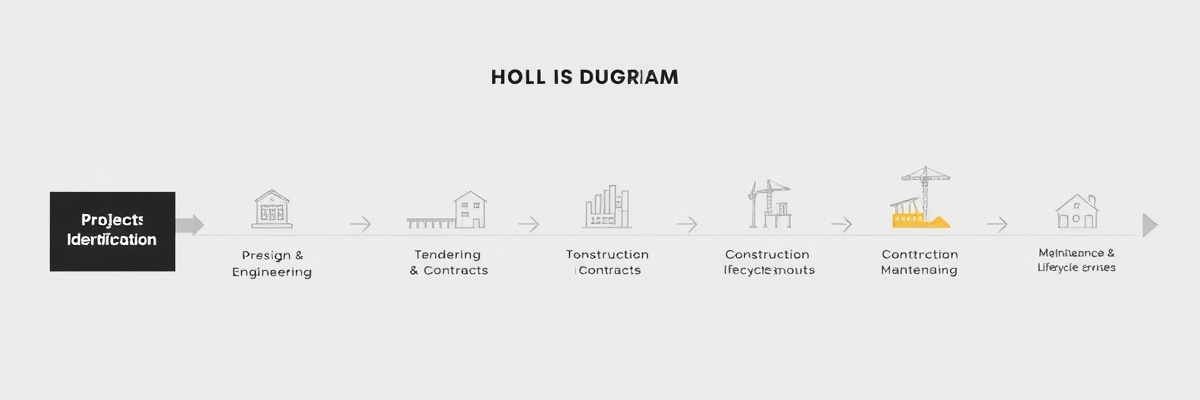
Stage 1: Project Identification
Projects originate from public sector (government) or private sector (developers, corporations) needs. Understanding what projects are in the pipeline—and positioning to win them—is critical.
- Government infrastructure projects and tenders
- Private commercial and residential development
- Industrial and manufacturing facilities
- Energy and utility infrastructure
Stage 2: Design & Engineering
Engineers and architects design the project. Good design is essential—poor design leads to cost overruns and delays. Firms that provide both design and engineering services capture higher margins.
- Architectural and engineering design
- Technical specifications and standards
- Environmental and regulatory compliance design
- Cost estimation and feasibility studies
Stage 3: Tendering & Contracts
Projects are typically released to tender. Contractors bid, and winners are selected. The contract terms define profit potential. Skilled tendering wins the best projects.
- Tender document preparation and analysis
- Competitive bidding and pricing strategy
- Contract negotiation
- Risk assessment and contingency planning
Stage 4: Construction Execution
The actual build phase. This is where profit is made or lost. Excellent project management, efficient operations, and skilled labor execution determine profitability.
- Site establishment and management
- Labor coordination and productivity
- Material procurement and management
- Equipment and machinery operation
Stage 5: Project Management
Controlling the project—staying on schedule, within budget, to specifications. Project delays and cost overruns destroy profits. Disciplined management is essential.
- Schedule management and milestones
- Budget control and cost tracking
- Quality assurance and compliance
- Client communication and stakeholder management
Stage 6: Maintenance & Lifecycle Services
After project completion, ongoing maintenance and service provide recurring revenue. Long-term contracts with property owners create stable, predictable cash flow.
- Facility maintenance and repairs
- Equipment servicing and updates
- Long-term service contracts
- Performance guarantees and warranties
Key Insight: Understanding this complete value chain helps you identify where profit is greatest, which stage requires least capital, and which you should focus on based on your capabilities and capital. The most successful construction companies often specialize in one stage—they become excellent at it, then build from there.
Where the Money Is Made: Revenue & Profit Drivers
Construction profit is not created by winning large contracts—it's created through efficiency, cost control, and strategic business model choices. Here are the four major profit drivers:
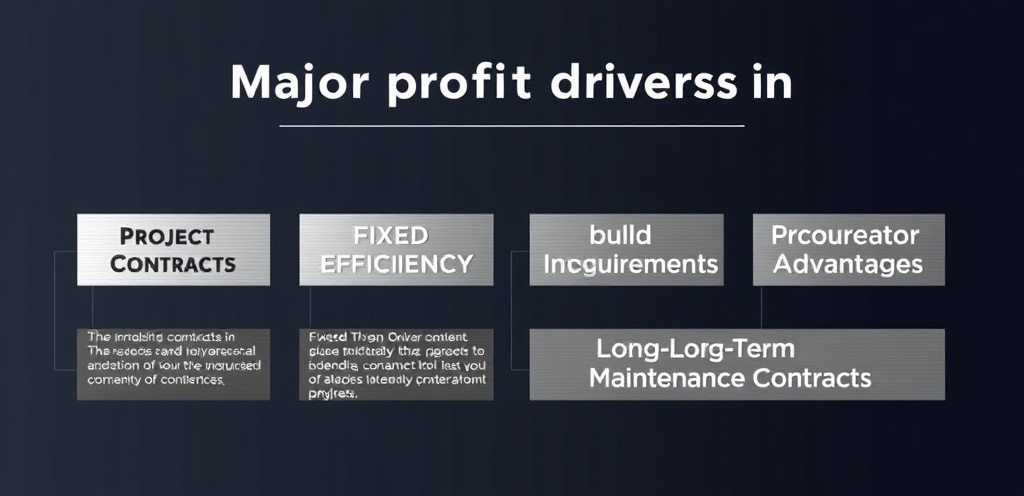
Profit Driver 1: Project Contracts
Revenue comes from construction contracts. The key is understanding contract types and their profit implications:
- Fixed-price contracts: You bid a fixed amount; any cost overruns reduce your profit. High risk, but high reward if you execute efficiently.
- Cost-plus contracts: You're reimbursed for costs plus a markup. Lower risk, but lower margins.
- Time & materials: You charge hourly rates or daily rates. Good cash flow but requires managing client expectations.
Successful contractors win fixed-price contracts where they can execute below their bid—that margin difference is profit.
Profit Driver 2: Margins Through Efficiency
Efficiency is where profits are made. A project bid at 10% margin becomes 20% margin if you execute it 50% more efficiently.
- Streamlined labor productivity
- Optimized equipment utilization
- Efficient material sourcing and scheduling
- Minimized waste and rework
The difference between a profitable and unprofitable contractor is often operational efficiency—same bidding, different execution.
Profit Driver 3: Bulk Procurement Advantages
Large construction firms have massive procurement advantages. They buy materials in bulk, negotiate better rates, and control supply chains.
- Volume discounts from suppliers
- Preferred vendor relationships
- Direct ownership of supply businesses
- Price advantages vs smaller competitors
This is a major moat that scale creates. Bigger firms have lower material costs, which translates to higher profit margins.
Profit Driver 4: Long-Term Maintenance Contracts
Recurring maintenance revenue is highly profitable and creates stable cash flow. Once you build a property, you can service it for decades.
- Facility maintenance (R5K-R20K monthly per building)
- Equipment servicing and upgrades
- Extended warranties and guarantees
- Predictable, recurring revenue
A construction company that handles both building and maintenance can double its profit potential on the same customer.
Critical Insight: Profit doesn't come from the size of the contract—it comes from execution efficiency, cost control, and strategic business model design. The most profitable construction firms win contracts at reasonable margins, then execute so efficiently they achieve 20-30% margins. That discipline is what builds billion-dollar firms.
Entry Strategies for Different Investor Levels
Wealth creation in construction is available at multiple entry levels. Your strategy depends on your capital, experience, and technical knowledge:
Beginner Level (R10K – R500K)
Start with experience and capital accumulation:
- Work in construction: Start as a site manager, foreman, or project coordinator. Learn how projects operate from the inside. Build relationships.
- Small renovations: Buy a small property, renovate it, and sell it. Learn the construction process with limited capital exposure.
- Handyman services: Provide small repair and renovation services. Build reputation and cash flow with minimal overhead.
- Subcontracting: Become a specialist subcontractor (electrical, plumbing, etc.). Build expertise and relationships.
Goal: Build knowledge, develop relationships, and accumulate capital before launching larger ventures.
Intermediate Level (R500K – R5M)
Launch a construction company focused on specific niches:
- Residential construction: Bid for residential building projects (townhouses, small apartment blocks). Proven model with good cash flow potential.
- Small commercial: Target small commercial projects (shops, offices, small industrial buildings). Higher margins than residential.
- Renovation company: Specialize in commercial renovation and fit-outs. Recurring demand, strong margins.
- Equipment leasing: Purchase and lease construction equipment to contractors. Stable recurring revenue.
Goal: Build an operationally profitable construction company, develop systems, and establish market reputation.
Advanced Level (R5M+)
Build large-scale operations and integrated business models:
- General contracting: Bid for large commercial and infrastructure contracts (R10M-R500M+). Requires solid reputation and financial strength.
- Property development: Identify land, design, build, and sell properties. Vertical integration creates highest margins.
- Engineering firms: Provide design and engineering services alongside construction. Design + build creates competitive advantage.
- Infrastructure contractor: Bid for government infrastructure projects (roads, water systems, utilities). Large scale, long contracts, predictable revenue.
Goal: Build a significant, multi-discipline construction enterprise with strong cash flow and growth potential.
Strategic Path: Most successful construction billionaires start with experience (working in the industry), move to small projects (renovations, subcontracting), then graduate to owning a general contracting firm, and finally transition to property development. Each stage builds on the previous—knowledge, relationships, and capital compound.
Capital Requirements by Business Model
Different construction business models require different capital levels. Here's what it takes to launch at each tier:
- Small renovations
- Handyman services
- Subcontracting work
- Equipment rentals
- Low overhead
- Residential building
- Small commercial
- Renovation company
- Fleet of equipment
- Small office setup
- General contracting
- Property development
- Infrastructure projects
- Engineering firms
- Multiple divisions
Detailed Cost Breakdown: Starting a Small Construction Company
If you're launching a residential/small commercial construction company, expect these costs:
- Business Formation & Licensing: R50K–R150K (company registration, licenses, insurance, legal setup)
- Office Equipment & Systems: R100K–R300K (office space lease, computers, project management software, tools)
- Vehicle & Equipment: R200K–R500K (work vehicle, initial tools, safety equipment)
- Working Capital: R300K–R800K (initial expenses before first project payment)
- Insurance & Bonds: R100K–R300K (liability, workers compensation, performance bonds)
- Marketing & Business Development: R50K–R150K (website, networking, initial marketing)
Total Initial Investment: R800K–R2.2M minimum for a functional construction company. Most successful launches start at R1.5M+ to have adequate capital reserves.
Important: Construction companies typically operate on thin margins (8-15%) during the execution phase. Strong cash flow management and working capital reserves are critical. Many construction companies fail despite profitability because they run out of cash before receiving project payments.
How Construction Companies Scale to Dominance
Building a significant construction business requires strategic scaling. Here's how professional operators expand from small companies to major enterprises:
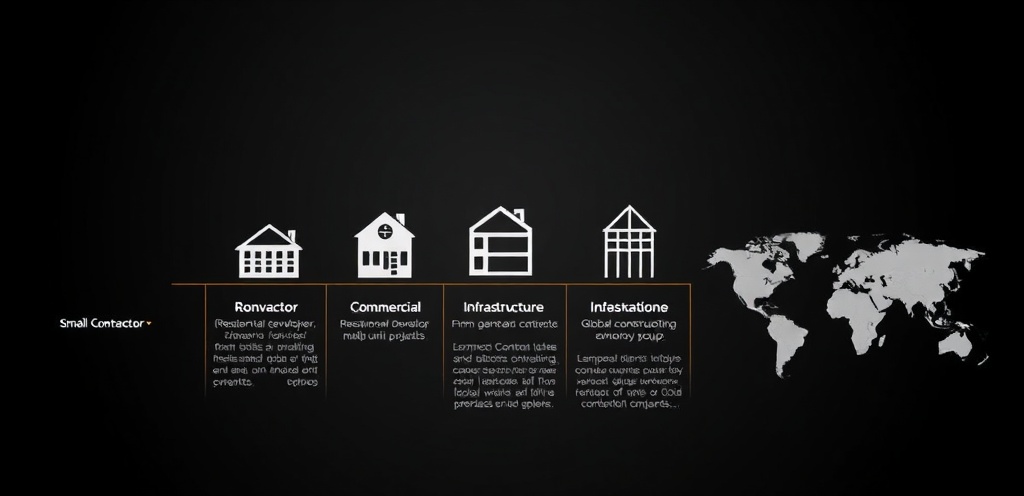
Stage 1: Increase Project Size
Start with small projects (R500K–R2M), build a strong reputation, then bid for progressively larger projects.
- Build reputation for on-time, on-budget delivery
- Develop relationship with developers and clients
- Increase bid amounts gradually as track record builds
- Create case studies and references for larger bids
Stage 2: Hire Skilled Teams
Growth requires delegating. Build a management team that can execute multiple projects simultaneously.
- Hire experienced project managers
- Build specialized trade teams
- Develop supervisors and site managers
- Create systems so projects run without your daily involvement
Stage 3: Build Supplier Relationships
Scale purchasing power. Negotiate volume discounts and preferred terms with suppliers.
- Negotiate volume contracts with material suppliers
- Secure equipment leasing arrangements
- Develop exclusive supplier relationships
- Control supply chain to improve margins
Stage 4: Improve Project Management Systems
Professional systems allow consistent execution across multiple projects.
- Implement project management software
- Standardize processes and procedures
- Create cost tracking and budgeting discipline
- Build quality assurance protocols
Stage 5: Expand Geographically
Once you dominate one market, expand to adjacent regions.
- Open new regional offices
- Hire regional management teams
- Build relationships in new markets
- Replicate systems in new locations
Scaling Principle: Construction companies scale by improving operational excellence at each stage, not by simply bidding for larger projects. The firms that win billion-dollar contracts are those with proven ability to execute smaller contracts efficiently. Build a strong foundation, then scale systematically.
High-Growth Construction Business Models
Not all construction businesses scale equally. These models have proven ability to grow from startup to multi-billion-rand operations:
Model 1: General Contracting
Win contracts from developers and project owners. Execute construction and earn margin.
- Scale: R50M–R500M+ annual revenue
- Margins: 8-15% on fixed-price contracts
- Capital: Requires working capital for labor and materials before payment
- Advantages: Proven, repeatable model
Model 2: Property Development
Identify land, design buildings, build, and sell. Combines construction with real estate appreciation.
- Scale: R100M–R1B+ depending on project type
- Margins: 20-40%+ when controlling full value chain
- Capital: Requires significant upfront land and development capital
- Advantages: Highest margins, real estate appreciation, long-term holds
Model 3: Engineering & Design Firms
Provide design, engineering, and construction. Design + build creates competitive advantage.
- Scale: R20M–R500M+ depending on specialization
- Margins: 15-25% on design + build contracts
- Capital: Moderate (primarily labor and overhead)
- Advantages: Higher-margin design services, recurring client relationships
Model 4: Infrastructure Contractors
Bid for government infrastructure projects (roads, water, utilities). Long contracts, predictable revenue.
- Scale: R100M–R5B+ for major groups
- Margins: 5-12% (thin margins, compensated by volume and stability)
- Capital: Requires strong balance sheet and bonding capacity
- Advantages: Large contracts, long-term relationships, government backing
Model 5: Specialized Services
Focus on specific construction specialties (mechanical, electrical, plumbing, fit-outs). Become the expert in one area.
- Scale: R20M–R200M depending on specialization
- Margins: 12-20% (higher than general contracting)
- Capital: Moderate (skilled labor, equipment)
- Advantages: Recurring demand, higher margins, competitive differentiation
Model Selection: Choose based on your expertise, capital, and market opportunity. Property development offers highest margins but requires most capital and real estate expertise. General contracting is the most common starting point. Infrastructure contracting requires government relationships and financial strength. Specialize in what you do best.
Construction & Engineering Opportunities in South Africa
South Africa presents significant opportunities for construction and engineering wealth-building due to infrastructure needs, development demand, and market dynamics:
Market Drivers
- Infrastructure needs: Government investing in transport, water, energy infrastructure
- Housing demand: Growing middle class seeking housing and upgrades
- Urban development: Inner-city renovation and new development projects
- Commercial growth: Shopping centers, offices, industrial facilities
- Industrial development: Manufacturing, logistics, technology hubs
Competitive Advantages
- Government tenders: Regular opportunities for infrastructure projects
- Growing private sector: Corporate and private development demand
- Regional expansion: Successfully proven in South Africa can expand to Southern Africa
- Skilled labor: Established pool of construction workers and specialists
Realistic Challenges
- Government payment delays: Government tenders often have slow payment cycles
- Project delays: Due diligence, environmental approval, permits can cause delays
- Labor challenges: Finding and retaining skilled workers is competitive
- Regulatory complexity: Compliance requirements and licensing are extensive
- Economic cycles: Building cycles are closely tied to economic conditions
South African Strategy: The best opportunities are typically in specialized niches or geographic markets with less competition. Building strong relationships with government, developers, and financiers is critical. Strong financial management and adequate working capital reserves are essential to navigate payment delays.
Managing Money in Construction: Capital & Cashflow Principles
Construction is capital-intensive and has unique cash flow challenges. Understanding these dynamics is critical to avoiding failure despite profitability:
Challenge 1: Projects Require Upfront Capital
You must pay for labor and materials before you receive payment from the client. Large projects can require significant working capital.
- Payroll must be made weekly or bi-weekly
- Materials must be purchased upfront
- Equipment must be rented or owned
- You only get paid upon milestones or project completion
Solution: Build cash reserves, secure credit lines, and structure contracts with milestone payments.
Challenge 2: Payment Delays Are Common
Clients (especially government) often delay payments. Invoice submitted may take 30-90 days to get paid.
- Government projects often have 30-60 day payment terms
- Private clients may dispute invoices or delay approval
- Disputes over workmanship can stall payment
- You may need to wait for final sign-off before payment
Solution: Negotiate milestone payments (50% at start, 30% at halfway, 20% at completion). Maintain financial reserves to cover gaps.
Challenge 3: Managing Multiple Project Cash Flows
As you scale, you'll have multiple projects at different stages. Cash inflow timing may not match cash outflow needs.
- Project A expenses occur in months 1-6, gets paid in month 8
- Project B expenses occur in months 4-9, gets paid in month 11
- Project C is starting (expenses begin immediately)
- You need cash to cover the gap between expenses and income
Solution: Maintain 3-6 months of operating expenses in cash reserves. As you scale, this becomes critical.
Challenge 4: Cost Overruns Destroy Profitability
On fixed-price contracts, any cost overrun comes directly from your profit. Budget discipline is essential.
- Labor productivity issues reduce margins
- Material price increases eat into profit
- Delays increase overhead costs
- Scope creep (undocumented changes) is unpaid work
Solution: Accurate budgeting, strict cost tracking, project controls, and clear scope documentation.
Core Principle: Profitable construction companies often fail because of cash flow issues, not lack of profitability. You can be 15% profitable but go bankrupt if you run out of cash before collecting receivables. Strong financial management is as important as good project execution.
How the Top Construction Players Win: Billionaire Strategy Principles
The wealthiest construction and engineering entrepreneurs follow consistent strategic principles. Here's what separates billion-rand operators from smaller competitors:
Principle 1: Control Large Projects
Wealth comes from managing large projects, not small ones. A R500K project has R50-75K profit; a R50M project has R5-10M profit.
- Build reputation on progressively larger projects
- Develop financial strength to bid large contracts
- Create capacity to execute major projects
- Dominate the projects you bid on
Principle 2: Build Strong Networks
Construction wealth is built on relationships—with developers, government officials, suppliers, and other contractors.
- Strong relationships lead to project opportunities
- Trusted contractors get preferential terms and opportunities
- Network opens doors for joint ventures and partnerships
Reputation is the most valuable asset in construction
Principle 3: Scale Operations Systematically
Scale through systems, not heroic effort. Build management and operational infrastructure that allows growth.
- Create documented processes and procedures
- Build management teams that execute without your daily involvement
- Develop regional structures for geographic expansion
- Maintain culture and quality standards as you scale
Principle 4: Focus on Operational Efficiency
Profit is made through efficiency, not just through winning contracts. Relentless focus on cost control and productivity.
- Measure and optimize labor productivity
- Negotiate best rates with suppliers and subcontractors
- Minimize waste and rework
- Control project timelines to minimize overhead
Principle 5: Expand into Development
The highest margins come from property development, not contracting. Transition from contractor to developer.
- Use construction expertise to develop projects
- Combine construction margin with real estate appreciation
- Move from R8-12M contract margin to R50-200M development profit
- Build long-term asset base alongside contracting
Core Strategy: Billionaire construction operators typically start as contractors, build reputation and capital through excellent project execution, then transition to development. They combine strong operational execution with strategic real estate positioning. The biggest wealth is made by those who own the assets they build.
Risks, Challenges & Honest Reality
Construction can create massive wealth—but it's also risky, competitive, and has unique challenges. Here's the reality:
Risk 1: Project Delays & Cost Overruns
Delays are the enemy of profitability. Every day of delay adds costs without adding revenue.
- Weather delays (common in many regions)
- Permitting and approval delays
- Material supply delays
- Labor productivity issues
Solution: Buffer contingency into schedules and budgets. Build experienced project management teams.
Risk 2: Client Payment Risk
You complete the work, but the client doesn't pay. This is a real risk, especially with smaller clients.
- Client financial distress or insolvency
- Disputes over work quality or scope
- Government payment delays or budget freezes
- Difficulty collecting on smaller accounts
Solution: Vet clients carefully, structure milestone payments, require deposits, and maintain credit insurance.
Risk 3: Labor & Operational Issues
Construction labor is challenging. Finding skilled workers, managing productivity, and maintaining safety.
- Finding and retaining quality workers is competitive
- Wage pressure during boom cycles
- Safety and compliance costs are high
- Labor disputes and strikes can halt projects
Solution: Invest in safety culture, fair wages, and worker training. Build systems that don't depend on single individuals.
Risk 4: Intense Competition
Construction is competitive. Margins get compressed when many contractors bid for the same work.
- Larger firms have advantages in scale and bidding
- Price competition erodes margins
- Specialization helps, but competition is still intense
- New entrants continuously enter the market
Solution: Build strong reputation, develop specialization, maintain cost leadership through efficiency.
Risk 5: Economic Cycles
Construction is cyclical. Economic downturns reduce building activity and squeeze margins.
- Recessions reduce private development
- Government budgets contract
- Project cancellations occur
- Demand for labor drops sharply
Solution: Build financial reserves during good times. Maintain geographic and project diversification.
Key Insight: Construction success requires excellence in operations, discipline in execution, and strong financial management. Those who treat it as a serious business—with systematic processes, careful cost control, and strong client relationships—build lasting wealth. Those who treat it casually fail.
Ethics, Responsibility & Long-Term Success
Building sustainable construction businesses requires ethical operation and responsibility. Responsible businesses outperform unethical competitors long-term.
Worker Safety
- Safety culture: Prioritize worker safety over schedule pressure
- Equipment standards: Maintain equipment and tools to safety standards
- Training: Invest in worker training and certifications
- Insurance: Maintain comprehensive workers compensation insurance
Safe operations are not just ethical—they're profitable. Accidents are expensive; safe operations are efficient.
Regulatory Compliance
- Building codes: Comply with all building codes and standards
- Permits: Obtain all required permits and approvals
- Environmental: Follow environmental protection requirements
- Labor laws: Pay fair wages, respect labor rights
Compliance is not negotiable. Violations result in fines, project halts, and reputational damage.
Quality Standards
- Workmanship: Deliver high-quality work that meets specifications
- Testing: Conduct required testing and inspections
- Warranties: Honor warranty commitments to clients
- Accountability: Stand behind your work
Quality reputation is your most valuable asset. Poor quality destroys future business opportunities.
Business Reality: Construction firms that operate ethically, prioritize safety, maintain quality standards, and comply with regulations build strong reputations and sustainable businesses. These firms ultimately outperform short-term focused competitors. Building billion-dollar construction empires requires building trust—and that comes from integrity.
Long-Term Wealth Principle: Build, Own, and Profit
The fundamental principle of construction wealth: Build → Own → Generate Cashflow = Long-term Wealth.
Stage 1: Build
Use your contracting business to build properties. Earn contracting margin on the build.
- Profit on construction contracts: 8-15%
- Build strong track record and reputation
- Develop relationships with developers and property owners
- Learn the development and construction process
Stage 2: Own
Transition from contracting to owning properties. Purchase or develop real estate.
- Leverage your construction expertise to develop at lower cost
- Earn development profit: 20-40%+
- Benefit from real estate appreciation
- Build a long-term real estate portfolio
Stage 3: Generate Cashflow
Generate ongoing cash flow from owned properties. Reinvest for growth.
- Lease properties for recurring rental income
- Provide maintenance and services (high-margin aftermarket revenue)
- Reinvest profits into more properties
- Build compound wealth over decades
Wealth Formula: Build → Own → Cashflow → Reinvest → Compound. The most successful construction billionaires don't just contract; they develop, own, and hold long-term assets. The transition from contractor to developer is where real wealth acceleration occurs. Contractor margins are 8-15%; developer/owner returns are 25%+ including appreciation and cash flow.
The Complete Picture: Building Billion-Dollar Construction Empires
Key Takeaways
- Construction is essential: Every economy needs buildings, infrastructure, and development
- Multiple entry points: From renovations (R10K) to general contracting (R5M+), opportunities exist at every level
- Profit comes from execution: Not from winning contracts, but from executing efficiently
- Cash flow is critical: Many profitable companies fail due to cash flow mismanagement
- Scale creates advantage: Larger firms have procurement advantages and can bid larger contracts
- Development drives wealth: Contracting earns 8-15%; development earns 25%+
- Long-term thinking wins: Billionaire operators think in decades, build asset bases, and reinvest
Your Path Forward
If you're interested in construction-related wealth creation:
- Beginner: Work in construction to develop knowledge and relationships. Start with small renovation projects.
- Intermediate: Build a construction company specializing in a specific niche (residential, commercial, renovations, specialty work).
- Advanced: Scale the contracting business, then transition to property development and long-term asset ownership.
Final Truth: Construction has created some of the world's greatest fortunes. The wealth is real, the opportunities are real, and the capital gains are extraordinary—but only for those who understand the business, execute with discipline, and maintain financial discipline through project and economic cycles. This guide provides the framework. Your disciplined execution will create the wealth.
Support This Knowledge-Sharing Mission
This comprehensive guide represents extensive research into construction and engineering wealth creation. If it has provided value to your understanding of the industry and opportunities, consider supporting the platform to help maintain and expand this educational resource.
Direct Bank Transfer
Support RS KAHN Holdings (PTY) Ltd through direct bank transfer to Nedbank.
Acc #: 1339994399
SWIFT Code: NEDSZAJJ
Branch Code: 198765
Why Support?
- Maintain and improve the platform
- Create advanced educational resources
- Develop specialized industry guides
- Share knowledge globally
Get Involved
Every contribution helps build a comprehensive wealth and industry education platform.
View Banking DetailsMaster Construction & Engineering. Build Your Billion-Dollar Empire.
This guide provides institutional-grade education on construction and engineering wealth-building. Use this foundation to evaluate opportunities, develop expertise, and execute disciplined capital allocation for long-term empire building.
View All Educational Guides Back to RS KAHN Platform